
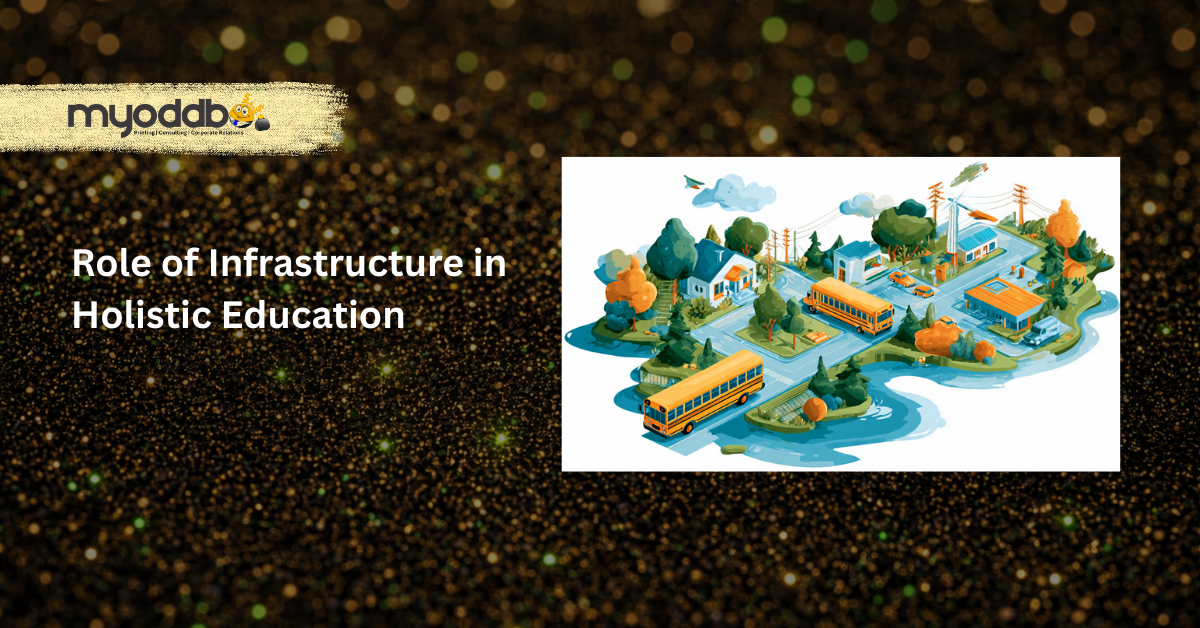
Infrastructure and the role of infrastructure in holistic education.
Introduction
The modern education has ceased to be restricted to books, tests and classrooms. Modern education system has been oriented towards the holistic education that is concerned with the complete growth of a student- academically, physically, emotionally, socially and morally. Educational infrastructure is one of the most important, and yet, frequently underestimated factors to attain this balanced development.
Infrastructure as a component of holistic education is much more than shelter on which to learn. The combination of well designed school buildings, safe classrooms, laboratories, libraries, sporting facilities, digital infrastructure and inclusive spaces is what help to develop an environment where students can thrive. The infrastructure has a direct influence on the learning, interaction, and development among the students.
The paper addresses the effectiveness of sound education infrastructure in enhancing holistic education and the reasons why schools, colleges and institutions should consider investing in it as a long-term project.
Learning About Holistic Education.
One approach is holistic education which is meant to produce the entire child not just academic intelligence. It focuses on:
Intellectual development
Physical well-being
Emotional and mental health
Teamwork and social skills.
Moral and ethical values
Critical thinking and creativity.
All these dimensions should be supported in the learning environment so that the holistic education process is successful and in this case infrastructure becomes a defining factor.
The Importance of Infrastructure in Education.
Educational infrastructure is used to define a physical and digital structure of teaching and learning. This includes:
Classrooms and buildings
Libraries and laboratories
Recreational and sporting facilities.
Sanitation and hygiene amenities.
Computer and technological infrastructure.
Accessibility and safety aspects.
Good infrastructure will make sure that learning is productive, interactive, inclusive and secure.
Infrastructure in Academics.
Well-Designed Classrooms
Large rooms with good ventilation and lighting will enable the students to focus more. Ergonomic seating, good acoustics and visual aids make people feel less tired and enhance concentration.
The use of smart boards, projectors and other digital gadgets in modern classrooms renders learning interactive and helps accommodate various learning styles.
Learning Resource Centres Libraries.
Libraries are important to the holistic education in that they promote:
Reading habits
Independent learning
Research skills
Critical thinking
An effective library containing both physical and web-based resources encourages enquiring and lifelong learning outside the curriculum.
Labs and Learning On-the-Job.
Labs, computer laboratories, language and innovation centers enable students to acquire knowledge by working on their hands. Hands-on learning enhances theoretical knowledge and develops critical thinking.
Infrastructure and Physical Development.
Fitness Centres and Sports.
Holistic education identifies the significance of physical health. Schools with:
Playgrounds
Indoor sports facilities
Gymnasiums
Yoga and fitness spaces
teach students to be active, develop endurance, and train to work as a team, and discipline.
Sports infrastructure is also a very important element of holistic education as regular physical activity leads to better concentration and academic performance.
Safe and Open Outdoor Spaces
Open spaces, courtyards and playgrounds enable the students to rest, socialize and re-connect with nature. Through such spaces, stress is lessened and emotional balance is enhanced.
Benefiting Emotional and Mental health With infrastructure.
Precautious and Non-Discriminatory Learning Environment.
Planned campus will guarantee:
Lighting and ventilation are considered.
Secure entry and exit points
CCTV and safety measures
Emergency preparedness
The sense of safety at school contributes to the freedom of expression among the students and the development of confidence.
Counseling and Wellness Rooms: There are two wellness rooms and two counseling rooms.
There are special counseling rooms, wellness facilities, and quiet areas promoting the mental health of the students. Such facilities enable students to consult, cope with stress, and have emotional resilience.
The Infrastructure in the Social Development.
Group Learning Environments.
The collaboration, communication as well as teamwork is promoted in group discussion rooms, activity halls, and multipurpose spaces. Social skills are acquired instinctively when the infrastructure is conducive to the interaction between the students.
Cultural Spaces and Auditoriums.
Schools can host: auditoriums and cultural halls.
Debates
Cultural programs
Workshops
Seminars
Community events
These platforms enable the students to gain confidence, leadership and speaking out to the audience.
Digital Infrastructure and Whole Person Education.
Smart Classrooms and E-Learning Tools.
There is no longer a luxury of digital infrastructure. Online classrooms and smart classrooms assist students:
Access global knowledge
Learn at their own pace
Develop digital literacy
Stay future-ready
Computer Labs and Internet Access Computer Labs are located in all cities, and this has played a major role in the growth of the sector.<|human|>Computer Labs and Internet Access Computer Labs are found in every city and this has contributed significantly to the development of the sector.
This is because of the exposure of the students to technology at an early age with reliable internet connectivity and up to date computer labs that help them learn to operate the computer in college and at work.
Infrastructure Inclusion to Equal Learning Opportunities.
Accommodation of every Student.
Wholistic education should be non-discriminatory. Students with different abilities should be supported by infrastructure in:
Ramps and elevators
Accessible washrooms
Assistive learning tools
Inclusive classroom design
Inclusive infrastructure will help to make every student feel appreciated.
Gender-Sensitive Facilities
Hygienic and separate washrooms, changing rooms, and safety are all aspects of dignity, comfort, and attendance, particularly among the girl students.
Hygiene, Sanitation and Health Infrastructure.
Malaria, medical rooms, waste management, and clean drinking water have a direct effect on student health. The health student is more attentive, confident and even motivated to learn.
A healthy infrastructure is a platform of long-term academic and personal development.
The Use of Infrastructure as a Value-Based Education.
The values taught by the school setting, albeit indirectly, are:
Discipline
Responsibility
Respect for public property
Environmental awareness
Green buildings, waste segregation systems and environmentally friendly campuses imparts sustainability and social responsibility to students through their daily lives.
Strengths of Educational Infrastructure in the Long-term.
The benefits of investing in good infrastructure have long-term benefits:
Better student performance.
Increased enrollment and retention levels.
Good reputation of the institution.
Enhanced community trust
Those schools that have a good infrastructure are in a position to adjust to new educational demands and international standards.
Difficulties in The Development of Educational Infrastructure.
Nevertheless, although being important, numerous institutions have difficulties with:
Limited funding
Poor maintenance
Population growth among students.
Lack of digital readiness
These barriers can be overcome with the help of strategic planning, the cooperation of the state and the private enterprise, and managing the infrastructure type of work.
Future of Holistic education infrastructure.
Flexible, technology, and infrastructure is the future of education. Trends include:
Green buildings and sustainable buildings.
Hybrid learning
Artificial intelligence based learning.
Those institutions that meet such changes will be in a better position to provide an all rounded education.
Conclusion
Infrastructure is a critical aspect in education. Infrastructure determines how students study, develop, socialize and equip themselves to live outside the academics. Be it in the classroom or libraries, sports facilities and online systems all play a part in the general growth of learners.
Holistic education cannot exist on its own–it needs a surrounding that fosters the knowledge, health, creativity, values, and emotional well-being. Through good, inclusive and future-focused infrastructure, educational institutions prepare individuals to become empowered, confident, and responsible persons.