
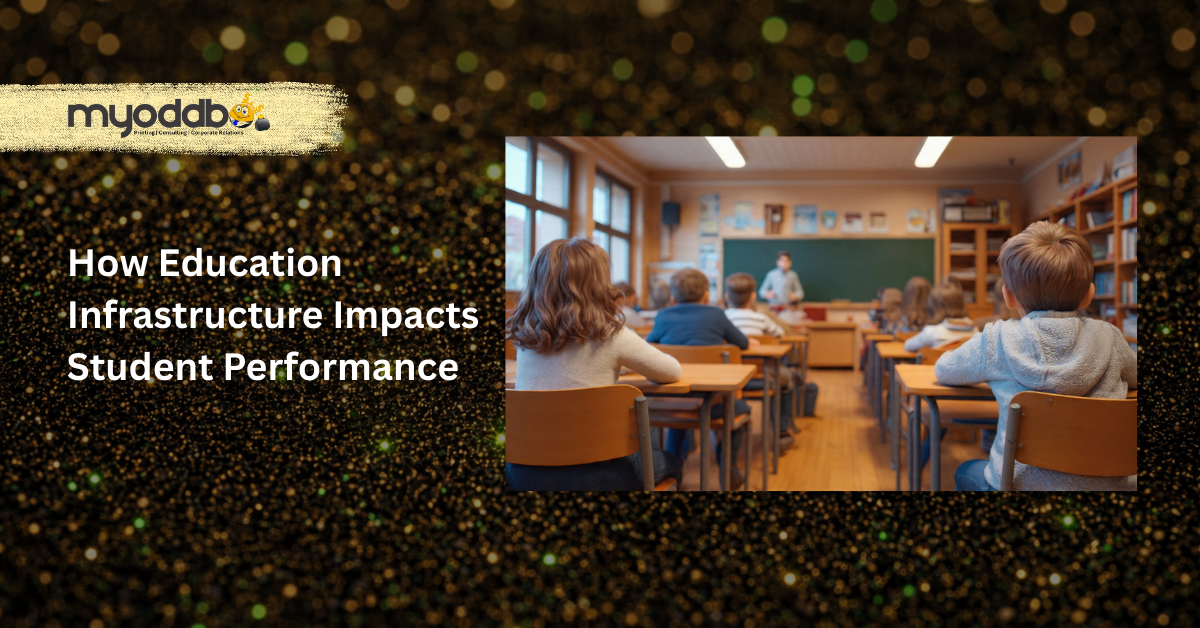
The effect of Education Infrastructure on Student Performance.
Introduction
The performance of students depends on numerous factors- quality teaching, curriculum, parental support and individual effort. Nevertheless, education infrastructure is one important element that is usually underestimated. The real and virtual environment, in which the students study, directly and measurably influences their academic success, focus, drive, and general growth.
Examples are necessary to understand the influence of education infrastructure on the performance of students among the schools, colleges, policymakers, and providers of education services. Properly designed infrastructure provides a conducive learning environment, boosts interaction and builds confidence. Bad infrastructure on the other hand can be a silent inhibitor of student success.
This article discusses the relationship between the school infrastructure and student achievement and why infrastructure must be considered as a strategic investment and not operational cost.
What Is Education Infrastructure?
Education infrastructure is made up of all the physical, technological, and support infrastructure that facilitates teaching and learning including:
Lecture halls and classrooms.
Seat design and furniture.
Libraries and laboratories
Sports and recreational centers.
Infrastructure and internet connectivity (digital).
Sanitation, safety and health amenities.
All these elements have a role to play in student learning experience and a direct effect on academic outcomes.
The Connection Between the Learning Infrastructure and the Student achievement.
A learning environment should be supportive in order to ensure that the students feel safe, comfortable and motivated. Students have been proven to perform better in an environment that is:
Clean and well-maintained
Properly lit and ventilated.
Placed with interaction and engagement.
Provided with the right learning equipment.
The infrastructure preconditions the efficiency of the teaching and learning process.
The Classroom Design and student performance.
Lighting and Ventilation
The natural light and adequate ventilation enhance focus, decrease exhaustion and promote vigilancy. Lack of proper light and crowded learning rooms may lead to discomfort, headache, and lack of concentration which impacts negatively on performance.
Classroom Size and Layout
Large classes reduce the movement and interaction thus complicating the aspect of managing lessons and students. The layout of the classrooms is spacious, and flexible to provide group activities and discussions, as well as collaborative learning to enhance the understanding and retention.
The classroom furniture and its role in the learning results.
Ergonomic Seating and Desks
The students spend a number of hours sitting daily. Badly designed furniture may result in pain and unhealthy posture and in the long run, health problems. The ergonomic furniture enhances physical comfort enabling the students to emphasize on learning instead of the pain.
Directly affected by comfortable seating are:
Attention span
Writing ability
Classroom engagement
Age-Appropriate Furniture
The age-related furniture is safe and functional. Appropriate height tables and chairs are used to ensure that students are in the right posture and this has a positive effect in concentration, and stamina.
Libraries are important in Academic Performance.
The reason of academic success is libraries. The library is well equipped, which promotes:
Reading habits
Independent learning
Research skills
Critical thinking
When students have access to good library infrastructure, they are likely to show improvement in their comprehension, use of vocabulary and analysis skills. Exam preparations and project works are also done in quiet resource-rich library spaces.
Working Labs and Hands-On Learning Areas.
Practical Learning Enhances Learning.
Laboratory classes which are science labs, computer labs, and language labs enable students to put theories into practice. This practical learning enhances the clarity of concepts and retention in the long term.
Building Capacity and Competency.
It is confidence, problem-solving, and technical competence, which are statuses with an enhanced academic performance and are developed with exposure to practical settings.
Student Achievement and Digital Infrastructure.
Integrating Smart Classrooms and Technology.
Smart boards, projectors and e-learning systems are some of the digital tools that make the lessons interactive and engaging. Multimedia and visual content appeal to a variety of learning styles, enhancing the understanding.
Access to Online Resources
A stable internet connection will enable students to access international knowledge, do research, and engage in online learning, which will have a great impact on the academic performance.
The Effect of School Facilities on the Motivation of Students.
Psychological Impact of Well-Maintained Space.
Neat, tidy and appealing surroundings form a positive attitude. When the environment is well maintained, students feel appreciated, and the level of motivation and discipline increases.
Sense of Belonging and Pride
A student is prone to respecting the rules, being active and owning the learning process when he/she is proud of his/her school environment.
Sports and Recreational Infrastructure Role.
Academic Performance and Physical Health.
Exercising helps in enhancing blood flow, memory and thinking ability. The balanced development is provided in schools with playgrounds, sports facilities, and fitness spaces.
Reducing Stress and Emotional Well-being.
Sport and recreational areas are useful in the reduction of stresses and anxiety, which enhances emotional well-being. Students who are balanced emotionally perform better at school.
Hygiene, Sanitation and Student Attendance.
Health and Concentration
Hygienic washrooms, drinking water, and sanitation exclude sickness and absenteeism. Students who are healthy attend classes and deliver consistently.
Impact on Girl Students
Sufficient sanitation facilities also play an important role in promoting the attendance and performance of girl students more so at the adolescence stage.
Homeland Security Infrastructure.
Designing a Safety Learning Environment.
Students feel secure when there is proper fencing, lighting, and surveillance systems as well as emergency systems within the campuses. Feeling of safety is critical towards focus and engagement.
Less Anxiety and Distracters.
Insecure students tend to get distracted and nervous. Infrastructure that is safety-oriented enables the students to give their attention to learning.
Non-discriminatory Infrastructure and Equal performance opportunities.
Accessibility of students with Special needs.
Students with disabilities are also guaranteed of equal participation in academics activities because of the presence of ramps, elevators, accommodating classrooms, and other assistive learning tools.
Inclusive infrastructure promotes fairness, respect and enhancement of performance among learners.
Effect of Teacher Infrastructure on Student Performance.
Comfort and Efficiency of Teachers.
Properly built teaching rooms, teaching materials as well as planning areas enhance teacher productivity and motivation. The teachers who are motivated provide better teaching which has a direct impact on the student results.
Reduced Teacher Stress
Good infrastructure translates to less administration and teachers are able to concentrate on the learning of the students.
Noise Control and Acoustic Design.
Lack of good acoustics may cause students to find it hard to get instructions clearly, which will influence the understanding. Noise control and soundproofing enhance communication and sound at classrooms.
Infrastructure and Rates of attendance.
Good schools have better infrastructure and they tend to:
Higher attendance
Lower dropout rates
Improved retention
The learning environment should be comfortable, safe, and engaging and this increases the likelihood of students attending regularly.
Effects in the Long Run on Academic Performance.
With time, good infrastructure leads to:
Improved test scores
Increased conceptual insight.
Higher graduation rates
Enhanced career readiness
Infrastructure is a mute facilitator of academic excellence.
Poor infrastructure to Education.
Poor infrastructure may result in:
Reduced concentration
Increased absenteeism
Lower academic performance
Poor student morale
Such difficulties are not equally distributed across institutions and are therefore more common in under-resourced institutions, and strategic investment is required.
Infrastructure as a Strategic Investment.
Education infrastructure is only a long term investment that offers quantifiable returns by:
Better student performance
Better institutional image.
Higher parent satisfaction
Strategic planning of infrastructure coordinates the physical spaces with the educational objectives.
Prospects of Education Infrastructure.
Education infrastructure of the future entails:
Smart and digital campuses
Flexible learning spaces
Green buildings sustainable buildings.
Technology-integrated classrooms
These inventions will improve more on how infrastructure and performance of students relate.
Conclusion
The importance of education infrastructure in student performance should be known so as to create effective learning environments. Infrastructure affects the concentration, motivation, health, safety, and emotional well-being; all of which determine academic success.
Quality classrooms, ergonomic furnishings, computerized tools, athletics, and secure campuses are among the features that ensure that students are in an environment that allows them to deliver their best. And as institutions develop robust, inclusive and future-proof infrastructure, they are investing in student performance and success in the long term.
Learning does not occur in a vacuum, it is grown in settings that are conducive to learning. Good infrastructure is not an indulgence but a platform that English schools can use to measure the performance and quality of education among the students.