
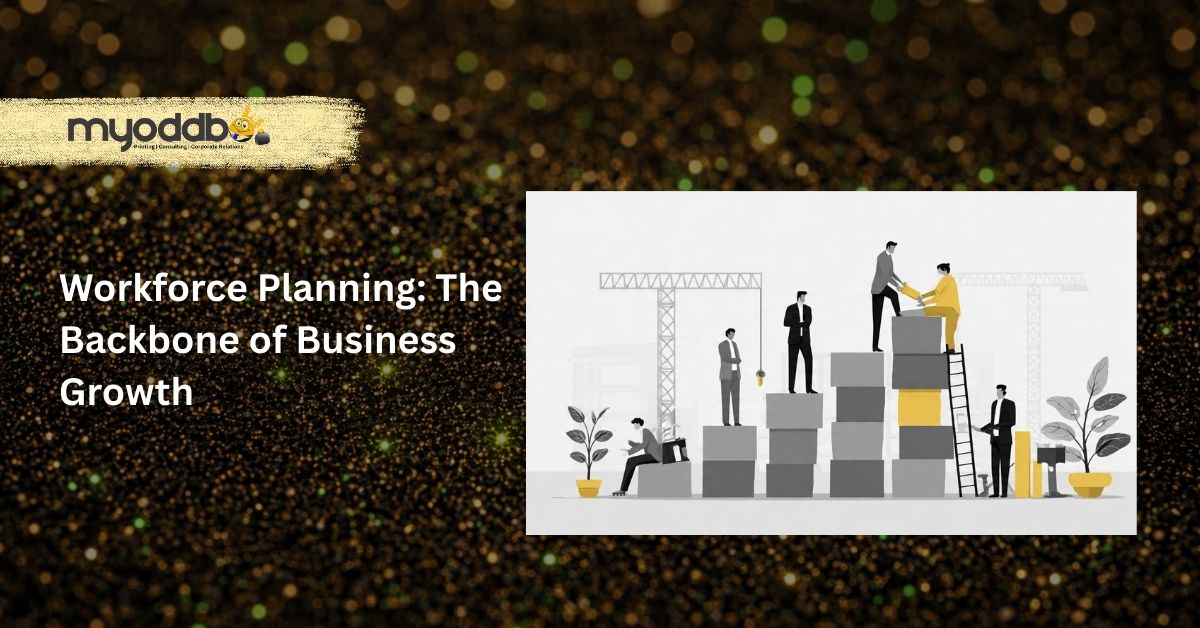
The Workforce Planning: The Skeleton of Business Development.
In a fast-changing technological time, where talent shortage and shifting business models are the order of the day, organizations simply cannot afford reactive hiring. Sustainable growth relies on the presence of the right people, the right skills, the right position, and the right time and that is what workforce planning brings.
Workforce planning is not an HR task only. It is a business strategic operation that has direct effect on productivity, profitability, scalability and competitiveness. The problem with companies that do not plan their workforce is the lack of skills, high turnover, excessive hiring expenses, and stagnated growth.
This blog discusses the importance of workforce planning as the foundation of business expansion and its manner of implementation by the organization.
What Is Workforce Planning?
Workforce planning: The process of workforce planning involves the analysis, forecasting, and planning of both the supply and demand of workforce in order to ensure an organization is able to achieve its present and future business goals.
It involves:
Evaluating the present working forces.
Determining talent requirements in the future.
Addressing skill gaps
Fitting people strategy to business.
Proper workforce planning helps organizations to be proactive as opposed to reactive.
The importance of workforce planning to the business growth.
Growth of any business without the planning of workforce is dangerous.
The major advantages of workforce planning are:
Assures continuity of business.
Minimizes staffing and operation expenses.
Enhances performance and productivity.
Supports scalability
Enhances retention of talent.
Companies that consider workforce planning as an element of their growth strategy are in a better position to manage changes and growth opportunities in the market.
Workforce Planning and Traditional Hiring.
Conventional recruitment is responsive. Planning of workforce is tactical.
Conventional Recruitment Workforce Planning.
Covering short-term vacancies
|Plans future talent requirement.
Short-term orientation Long-term strategy.
The more attrition risk The more retention.
Skill mismatches Skill alignment.
Workforce planning makes hiring a cost center more of a growth enabler.
The Relationship between Business Strategy and Workforce Planning.
The workforce also makes a business strategy as strong as it could be.
Workforce planning ensures:
Availability of talent to expand.
Leadership readiness
Ability fit in innovation objectives.
Operational efficiency
Workforce planning, as an example, is an activity that ensures that the firm is ready to embrace new talents in case of expansion in new markets or adoption of newer technologies.
The Major Elements of successful Workforce Planning.
Workforce Analysis
The initial one is to get to know who is working in your organization.
This includes:
Proficiencies and dexterity of employees.
Experience levels
Performance data
Attrition trends
An actual image of the current workforce will show strengths and weaknesses.
Demand Forecasting
Demand forecasting establishes the future requirement of the workforce depending on:
Business growth plans
Market trends
Technology adoption
Expansion strategies
This assists the organizations in predicting:
New roles
Skill upgrades
Leadership requirements
Supply Forecasting
Supply forecasting determines the ability to acquire the needed talent either internally or externally.
It considers:
Internal promotions
Upskilling opportunities
Succession planning
Availability of external hiring.
The adoption of both internal and external sources of talents lowers the risk of hiring.
Gap Analysis
Gap analysis is used to compare demand and supply of workforce to determine:
Skill shortages
Talent surpluses
Leadership gaps
This is a step that leads to the decision on hiring, training or restructuring.
The Workforce Planning as the Cost Optimization Tool.
The result of poor planning of the workforce is:
Overstaffing
Underutilization
High recruitment costs
Emergency hiring
Strategic workforce planning assists organizations:
Control labor costs
Reduce overtime expenses
Optimize productivity
Profitability and sustainable growth are a direct result of cost efficiency.
Use of Technology in Workforce Planning.
The current mode of workforce planning is based on data and technology.
Useful Tools Include:
HR analytics platforms
The management systems of the workforce.
AI-based forecasting tools
Learning management systems.
With the help of technology, it is possible to gain real-time insights, predictive analytics, and make informed decisions.
Talent Development and Workforce Planning.
Workforce planning points out the future skills needs enabling the organizations to make investments in specific talent development.
Strategies of Talent Development:
Upskilling programs
Leadership development programs.
Cross-functional training
Mentorship programs
Nurturing internal talent will decrease reliance on outsourcing.
Planning and Retention of the Workforce.
Employees will be more willing to remain when they observe:
Clear career paths
Growth opportunities
Investment in skills development.
Planning of the workforce helps to ensure a systematic promotion of careers and enhance retention and participation.
Different Business Stage Strategic Workforce Planning.
Startups
Target talent that is multi-skilled.
Avoid overhiring
Plan scalable roles
Growing Businesses
Develop leadership pipelines.
Empower working teams.
Specialize in skills.
Large Enterprises
Succession planning
Workforce optimization
Developing the future-skilled workforce.
Workforce planning is flexible to organizational maturity.
Planning the workforce in a transitioning business environment.
Today’s businesses face:
Automation and AI
Remote and hybrid model of work.
Global talent competition
Economic uncertainty
Workforce planning provides agility through preparing companies against disruption as opposed to responding to disruption.
Typical Workforce Planning Issues.
Workforce planning is a very crucial issue but many organizations have a hard time with it.
Common Challenges:
Lack of accurate data
Inappropriate fit to business strategy.
Short-term thinking
Resistance to change
To deal with such issues, the leaders should be committed and make evidence-based decisions.
Best Practice to successful workforce planning.
Match business targets with workforce planning.
Use data and analytics
Engage leadership and HR cooperation.
Review and revise plans on a regular basis.
Make an emphasis on culture and skills.
The long-term success depends on consistency.
HR Leader Workforce Planning Role.
HR leaders can also be strategic partners because they:
Business strategy to talent requirements.
Workforce analytics management.
Motivating talent development efforts.
Promoting leadership planning.
The new HR is not an administrative one anymore, it is a strategic one.
Employee Planning and Competitiveness.
Organizations that have been very successful in workforce planning:
Adapt faster to change
Innovate more effectively
Retain top talent
Provide improved customer performance.
This provides a competitive sustainable strength in the market.
Recruitment and Staffing Planning of the Workforce.
Workforce planning will make the process of recruitment more effective.
Benefits :
Reduced time-to-hire
Better candidate quality
Lower attrition
Improved employer branding
There are intentional staffing decisions that are growth-oriented.
How to measure Workforce Planning Success.
Key metrics to track:
Workforce productivity
Skill gap closure rates
Employee engagement scores
Attrition and retention rates.
Cost-per-hire
Frequent assessment will guarantee constant improvement.
Trends in Workforce Planning in the Future.
Artificial intelligence-based human resource analytics.
Proficiency-driven staffing frameworks.
Remote workforce planning
Agile talent deployment
Those organisations that adopt such trends will dominate the future of work.
In summary, Workforce Planning Is Not an Option.
Business growth is anchored on workforce planning. In its absence, event the most powerful business strategies fail to perform.
Organizations may also set up a sustainable workforce by matching talent and strategy, predicting future requirements and investing in individuals.
Companies that take the issue of workforce planning seriously do not just develop, they develop intelligently, efficiently and resiliently.